The Content Marketing Funnel: What Content to Offer at Each Stage of the Customer Journey
A visitor asking 'what is SEO?' isn't ready to request a quote. The content funnel gives each stage what it needs, then leads the reader to the next step.
Customers don't reach a buying decision in one visit. They start with a general question about their problem, then compare solutions, then choose a provider. The content marketing funnel organises your content around those stages: each stage gets content that fits its question and a link to the next step. The common mistake is offering sales content to people still learning about the problem.
Key takeaways
- 1The funnel has three stages: problem awareness, comparison and evaluation, then decision.
- 2Each stage has a different content type and a different metric.
- 3Every piece of content should lead to the next stage with a clear link.
- 4Build the bottom of the funnel first, as it's closest to enquiries, then what leads to it.
Content marketing funnel stages and what readers need at each
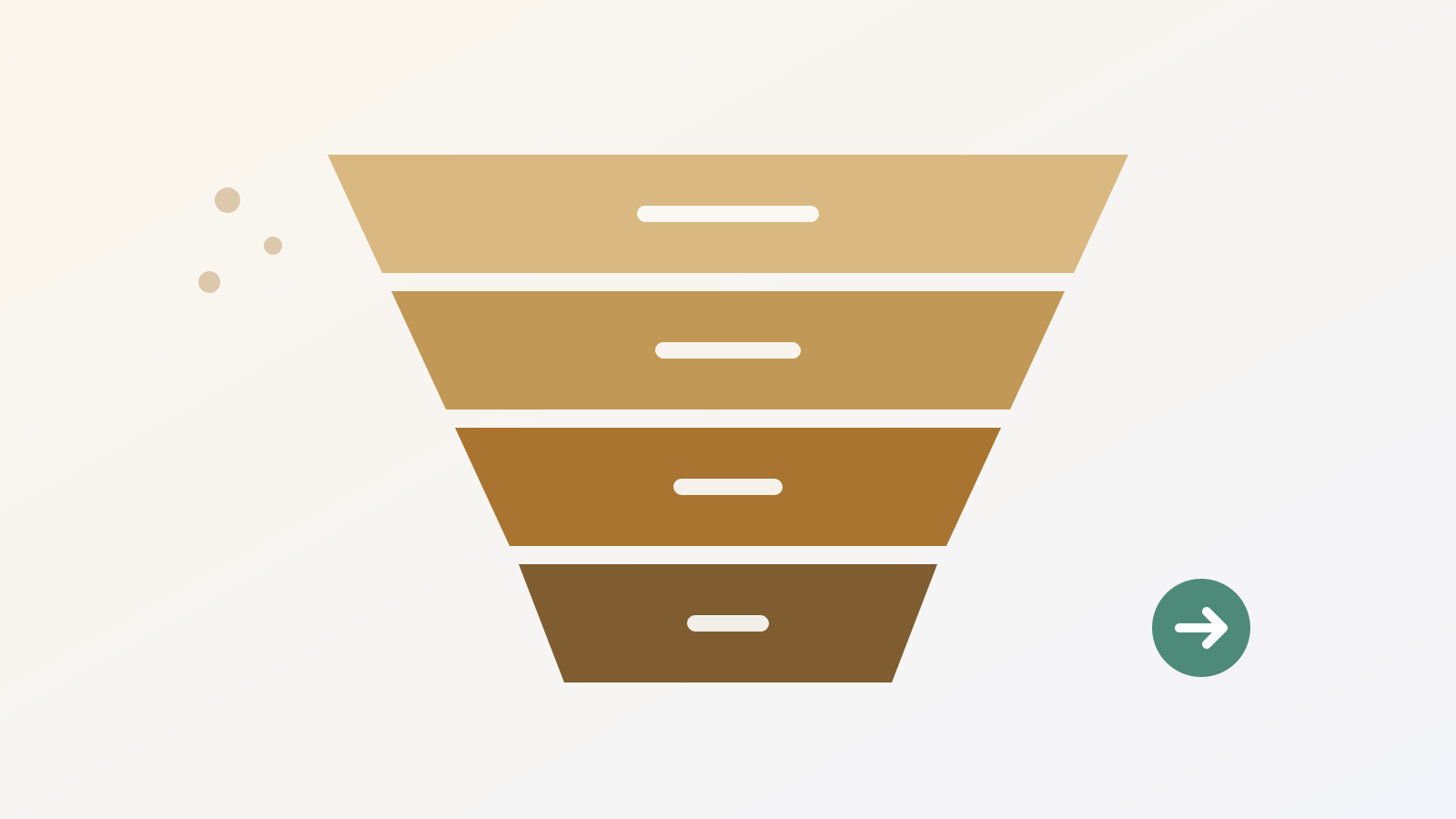
With each stage there are fewer readers, but they're more serious. The right content changes with the question they're asking:
The content funnel from question to decision
- 1Awareness
"Why doesn't my site bring customers?" Educational guides that explain the problem
- 2Interest
"What solutions are there?" Comparisons, lists and a newsletter
- 3Evaluation
"Why this provider?" Case studies and real work
- 4Decision
"How do I start?" A service page, FAQs and a quote
The Content Marketing Institute publishes plenty of free research and guides on planning content around the customer journey, a useful reference if you want to go deeper.
Content types for each stage
| Stage | The reader's question | The right content | The next link |
|---|---|---|---|
| Top of funnel | What's the problem, and why does it happen? | In-depth guides, educational articles and free tools | To a comparison or deeper guide |
| Middle of funnel | What are the solutions, and how do I choose? | Honest comparisons, a newsletter and criteria lists | To a case study or service page |
| Bottom of funnel | Why you, and what does it cost? | Service pages, case studies and FAQs | To the contact form |
1. Top of funnel: teach before you sell
Readers here don't know you and are trying to understand their problem. The best thing to offer is an in-depth guide that answers their question honestly, as in our technical SEO guide, or a useful free tool such as the Website SEO Checker. This content builds trust and attracts search traffic, and you choose its topics through keyword research.
An illustrative example: a web design company
At the top of the funnel, a small business owner searches "why doesn't my website show up on Google?". They aren't looking for a company yet; they want to understand the problem. An article that explains the common causes clearly, and gives them steps to try themselves, builds trust without asking for anything. At the end, a natural link leads to a deeper guide on improving the site, not straight to a "request a quote" page.
2. Middle of funnel: help them compare
Showing each option's pros and cons, even where your solution isn't the best fit for every case.
Turns passing readers into an ongoing relationship, as in our newsletter guide.
What to ask before signing with any provider.
Be honest in comparisons
Comparison content that only praises your own option convinces nobody. Explain when the alternative genuinely fits better: "If your site is a few pages that rarely change, a ready-made platform may be enough." That honesty makes readers trust your advice when you say their situation needs a custom solution.
3. Bottom of funnel: remove the last doubt
Readers here are close to deciding and are looking for proof and reassurance. A clear service page, a real case study, FAQs on cost and timing and a short contact form. Designing these pages follows our landing page conversion principles.
The questions that come before a purchase
At this stage customers ask practical questions: roughly how much does it cost, how long does it take, what happens after delivery, and what if I'm not happy with the result? Collect these questions from your sales team and answer them clearly on your service and FAQ pages. Every unanswered question is a reason to postpone the decision or go to a competitor who answers it.
4. Connect the stages and measure each
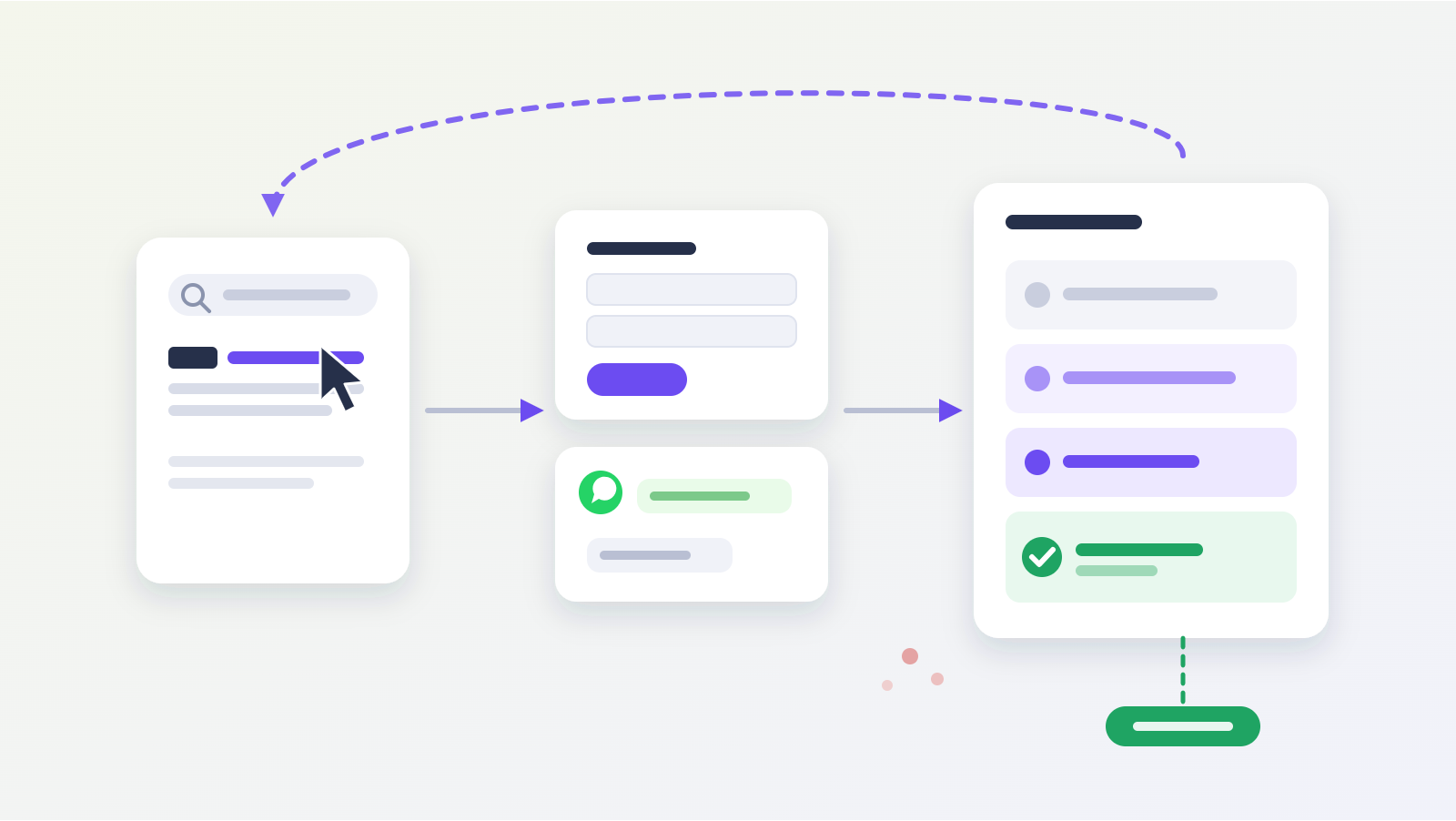
The funnel only works if its stages connect. Every article leads to the next, and every stage is measured appropriately:
- 1Link every article to the next stage
A clear link to a comparison, case study or service, as in our internal linking strategy.
- 2Measure the top by visibility
New visitors and queries in Search Console.
- 3Measure the middle by engagement
Sign-ups and moves to service pages.
- 4Measure the bottom by enquiries
Forms submitted and their source via UTM links.
Track paths, not just pages: which articles do visitors read before they eventually request a quote? Those articles are your most valuable content, even if they aren't the most visited, and they deserve updating and promoting more than the rest. This is where a content marketing funnel proves its worth.
Common content marketing funnel mistakes
All content in one stage. A blog full of educational articles but no clear service pages attracts visits that never become customers. A site with only sales pages isn't found by people still learning about their problem.
Dead ends. A good article with no link to a next step leaves readers without direction. End every piece of content by suggesting the step that suits its stage.
Judging every stage by sales. An educational article isn't measured by direct enquiries, but by whether it attracts the right audience and moves them to the next stage. Each stage has its own metric.
Forgetting existing customers. The funnel doesn't end at purchase. Content that helps customers get the most from what they bought raises satisfaction and turns them into people who recommend you.
Building the whole funnel before publishing anything. Planning every stage in detail can take months. Publish a first piece for each stage, watch how readers move between them and fill the gaps your content marketing funnel reveals.
Conclusion
The content marketing funnel puts the right content in front of the right reader at the right time: teaching at the top, comparison in the middle, reassurance at the bottom and links that lead from one stage to the next. Start with the bottom, build what leads to it and organise it within your content strategy. If you'd like a complete content funnel built, explore our content and digital strategy service.
Frequently asked questions
What are the stages of the content funnel?
Usually three: top of funnel for problem awareness, middle for comparing and evaluating, and bottom for deciding. Some add a post-purchase loyalty stage.
Which stage should I start with?
Usually from the bottom: service pages, case studies and FAQs, since they're closest to enquiries. Then build the content that leads to them.
How do I measure each stage?
The top by visibility and new visitors, the middle by engagement, sign-ups and moves to service pages, and the bottom by enquiries and sales.
How many articles do I need for each funnel stage?
There's no fixed number. Start with enough to cover the essential questions: a few educational articles on your customers' main problems, one comparison page or buying guide, and a clear page for each service. Then add more as your data shows where visitors drop off.
Does the funnel work for business-to-business companies?
Yes, and the stages are often longer, because the decision involves more than one person. The middle of the funnel then needs content that helps the buyer convince colleagues and managers: documented case studies, cost calculations and answers to security and support questions.
Sources & references

I believe technology is useful when it solves a clear problem — not when it's adopted because it's trendy. AI is a powerful tool for speeding up research, writing, analysis and automation, but it needs human expertise to review, guide and verify accuracy. That's why I prefer to start by understanding the business and its goals, then choose the simplest solution that delivers a measurable result, and build audience trust with honest, useful content.
- Reader rating
- 5.0(2)
- Published articles
- 82
- #content marketing
- #funnel
- #strategy
How would you rate this article?
Be the first to rate
Comments
No comments yet. Share your thoughts!