A/B Testing for Websites: How to Test Changes and Trust the Result Before You Adopt It
An A/B test answers one question: did the change really improve results, or was it chance? Doing it right protects you from decisions based on misleading early numbers.

A/B testing is how you find out whether a change to your website really improved results or the difference was chance. You randomly split visitors between two versions of a page that differ in one element, such as a headline or a button, then compare each version's conversion rate. The idea is simple, but mistakes are common: stopping early, changing several things at once, or testing a page nobody visits. This guide explains how to do it properly.
Key takeaways
- 1Start with a written hypothesis: what you'll change, why, and what you expect.
- 2Change one element so you know what caused the difference.
- 3Set the sample size and duration before starting, and don't stop at the first striking result.
- 4Test high-impact ideas on your highest-traffic pages first.
What should you test first?
Your list of ideas is always longer than the time available. Rank it with two questions: what's the expected impact on leads, and how much effort does it take? Then start with the quadrant that combines high impact and low effort:
Prioritising test ideas
Redesigning a whole page: big potential impact, but it needs planning.
Headline, button text and form length: easy to change and close to the visitor's decision.
Complex changes on low-traffic pages.
Obvious fixes like a broken link or a typo don't need a test.
Steps for a proper test
A good test is planned before it starts, not after the numbers appear:
- 1Write the hypothesis
"Cutting the form from seven fields to four will raise leads, because visitors abandon long forms."
- 2Choose one metric
Such as form submission rate, not ten metrics to pick from later.
- 3Work out the sample size
How many visitors each version needs to detect the difference that matters to you.
- 4Run for a full period
At least a week or your business cycle, to cover day-of-week differences.
- 5Read the result once
On the planned date, then decide: adopt, reject or test a new idea.
Why do early numbers fool you?
In the first days traffic is small, so rates swing a lot; one version can look far ahead, then the gap disappears over time. Checking repeatedly and stopping at the first striking difference raises the chance of adopting a false "winner":
The two versions side by side
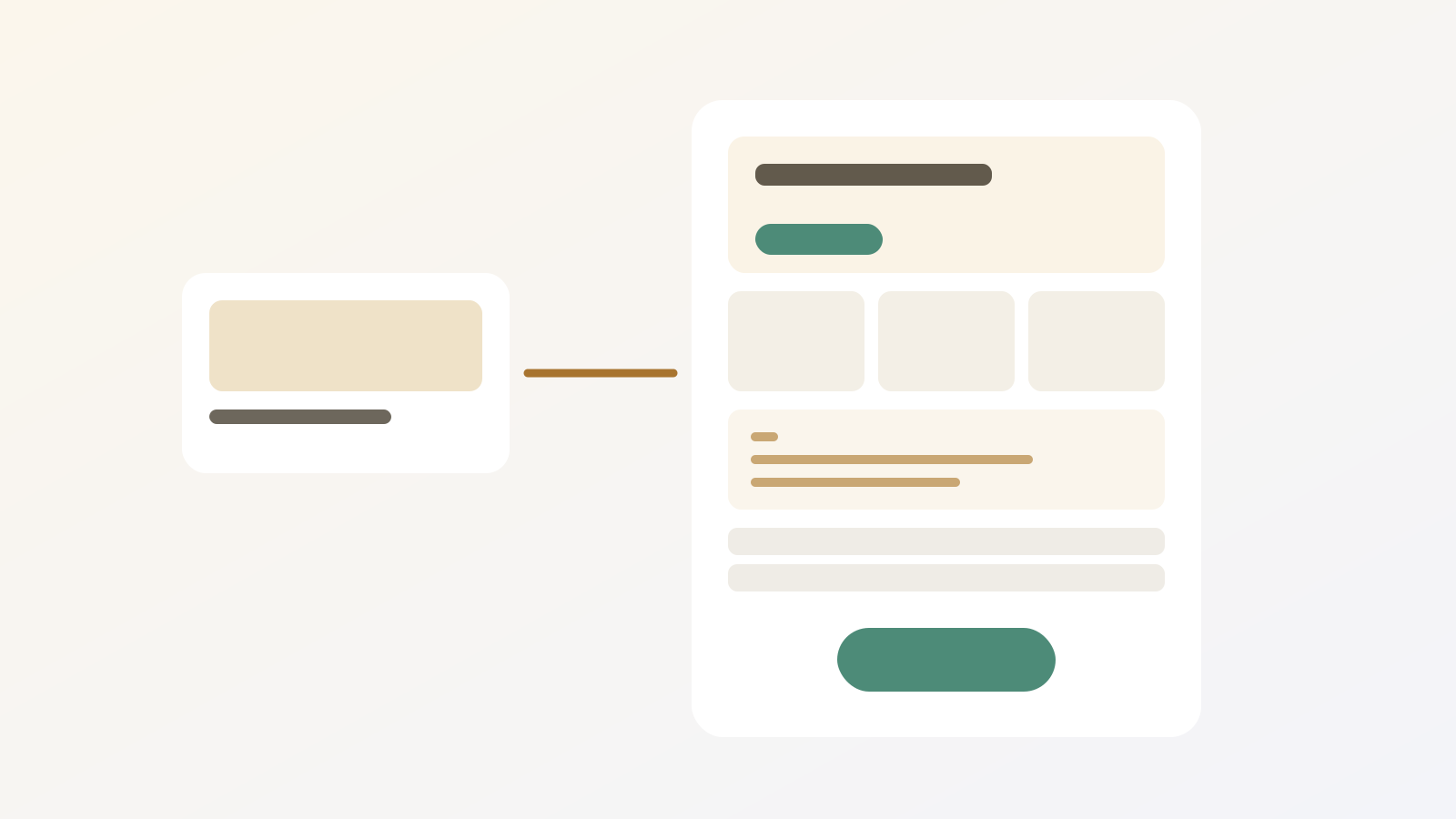
Here's an example test on a service page, where one thing changes: how clear and focused the page is on a single action:
Version A: current
- A generic headline that doesn't state the benefit
- Three equally prominent buttons
- A seven-field form
Version B: proposed
- A headline stating the result the client gets
- One clear primary button
- A four-field form
Note this example changes more than one element, which suits testing a whole "direction" on a high-traffic page. To learn each element's effect, test them one at a time. For page improvement ideas, read our landing page conversion guide and UX principles for conversion.
Measure before you test
A test needs reliable conversion tracking first. Set up key events as in our Google Analytics 4 guide, and work out conversion rates with the Conversion Rate Calculator. If your site has little traffic, start by reviewing visitor paths and asking customers; they reveal obvious problems that don't need a test.
Conclusion
A proper A/B test starts with a written hypothesis and a single metric, changes one element, runs until the planned sample size and duration are reached, and is read once. Start with high-impact ideas on your busiest pages. If you'd like to improve your site's pages with a data-driven plan, see our SEO and digital marketing service.
Frequently asked questions
What is an A/B test?
Randomly splitting visitors between two versions of a page that differ in one element, then comparing each version's conversion rate to learn which is better with statistical confidence.
How long should an A/B test run?
Until each version has enough visitors and conversions, and for at least a full week or your business cycle, since visitor behaviour varies across the week.
Can I stop the test as soon as a winner appears?
No. Early differences often vanish, and stopping at the first striking result greatly raises the chance of a false win. Set the sample size and duration before starting and stick to them.
What if my site has little traffic?
Test big changes on your highest-traffic pages, or use other methods such as user testing and session reviews, because small differences need a lot of traffic to prove.
Sources & references

I believe technology is useful when it solves a clear problem — not when it's adopted because it's trendy. AI is a powerful tool for speeding up research, writing, analysis and automation, but it needs human expertise to review, guide and verify accuracy. That's why I prefer to start by understanding the business and its goals, then choose the simplest solution that delivers a measurable result, and build audience trust with honest, useful content.
- Reader rating
- 5.0(3)
- Published articles
- 83
- #a/b testing
- #conversion
- #experiments
- #cro
How would you rate this article?
Be the first to rate
Comments
No comments yet. Share your thoughts!