A Digital Transformation Roadmap for SMEs: Realistic Steps Without the Buzzwords
Digital transformation isn't buying new software; it's changing how you work to serve customers better. A phased roadmap that starts with the problem, not the technology.
Digital transformation is used so often it has lost its meaning. For small and mid-sized businesses it simply means using technology to deliver more value to customers, get work done with less effort and fewer errors, and make decisions based on data. Transformation projects usually stall because they start with technology instead of problems. This guide lays out a realistic digital transformation roadmap in five phases, with examples, the mistakes to avoid and a sample twelve-month plan.
Key takeaways
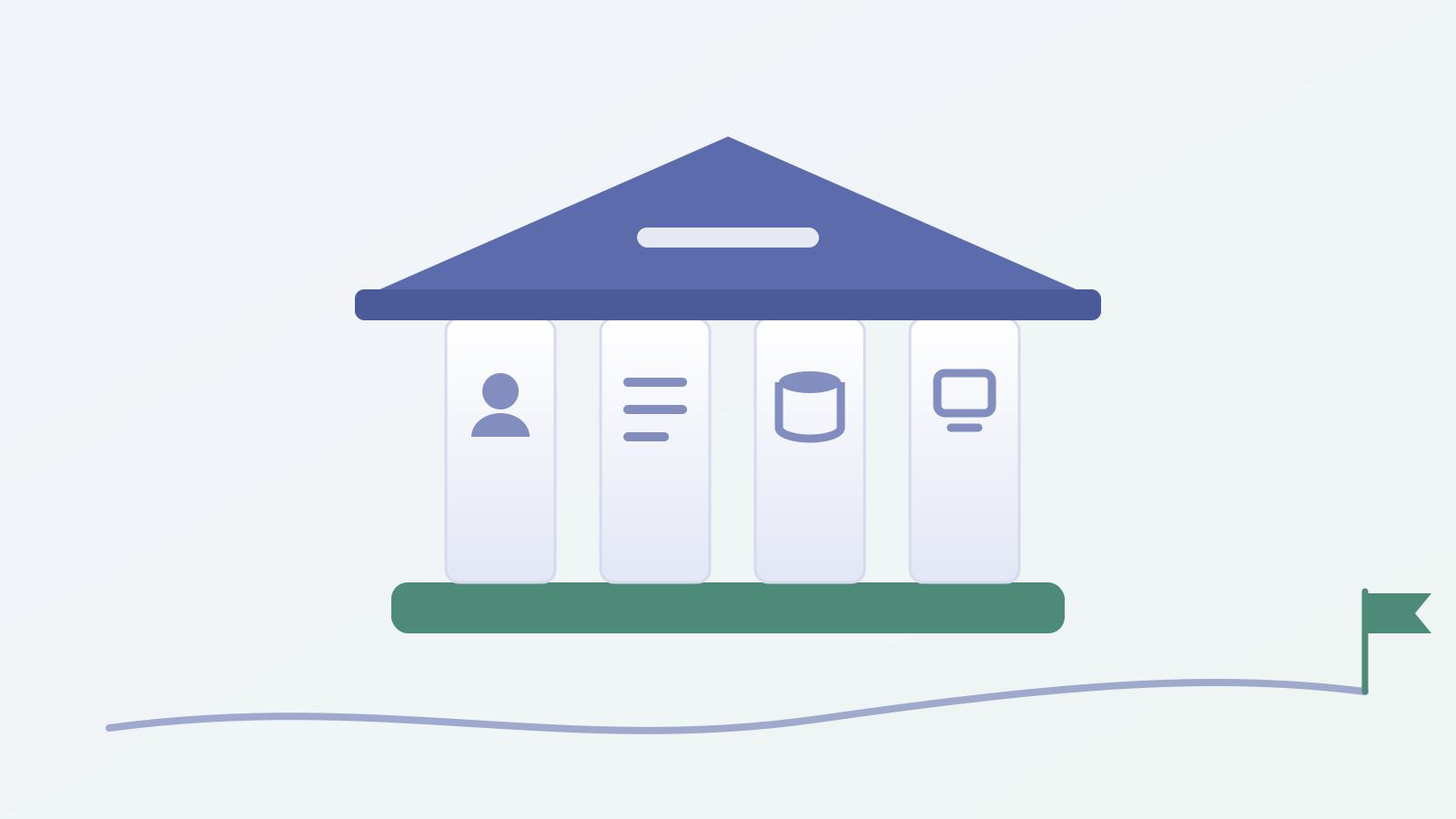
- 1Digital transformation stands on four pillars: people, processes, data and the technology that serves them.
- 2Start with an honest assessment and a real customer problem, not a software purchase.
- 3Build the foundations, pilot on a small scale, then scale with training and a gradual retirement of old ways.
- 4Change management is the deciding factor, and success is measured by results, not launch dates.
The four pillars behind a digital transformation roadmap
Technology is one pillar of four, and not the first. If one pillar falls, the whole structure falls, however modern the tools:
What holds digital transformation up?
- People
Skills, culture and readiness for change
- Processes
Getting work done in fewer steps
- Data
One trusted source of truth
- Technology
Tools that serve the other three
Phase 1: An honest assessment
Before any decision, answer four questions, gathering answers from the team and customers, not management alone:
Where do customers hit delays or complexity: ordering, paying, follow-up or support?
Where does the team lose time copying data and hunting for information?
Do we have one trusted number for sales and customers, or several conflicting spreadsheets?
How comfortable is the team with digital tools, and what training does it need?
Assessment questions that reveal where you really stand
Instead of a vague question like "are we digital?", ask questions you can answer with numbers: how many hours a week does the team spend on manual data entry? How many separate systems do we use, and do they talk to each other? If one employee is away, does an important process stop because the information is in their head or on their laptop? How long does it take to answer a customer enquiry? Do we know which marketing channel brings the most profitable customers?
Give each of the four pillars a score from 1 to 5 based on those answers, and ask three people from different departments to score independently, then compare. The gaps between your scores are as useful as the scores themselves, because they reveal what one department sees and another doesn't. This assessment is the baseline against which you'll measure your digital transformation roadmap six months from now.
Phase 2: Set priorities
Put each opportunity on a simple matrix: impact on customers or revenue versus difficulty to implement.
The transformation priority matrix
Big impact but hard, like an integrated operations system: plan them in phases.
Booking or ordering through the website, a simple CRM, electronic invoices and payments.
Hard with limited impact: not worth the resources now.
Easy with limited impact: do them when time allows.
Phase 3: Foundations
Don't skip the foundations; everything after depends on them:
- 1A fast, clear website
Your company's digital shopfront, as in our professional website guide.
- 2Organised accounts and permissions
With two-factor authentication on every important account, as in our password security guide.
- 3Tested backups
For important data, including restore tests. Details in our backup guide.
- 4One source of truth
For each core data type: customers, sales and inventory.
Why do security and data come before new tools?
Every digital tool you add widens the area where a mistake or breach can happen. So the foundations start with things that look boring but are decisive: a separate account for each employee instead of shared passwords, two-step verification on email and key systems, backups whose restore is actually tested, and a clear list of who can access what. The NIST Cybersecurity Framework offers a structured way to organise these, even for small businesses.
The same goes for data: agree on one home for each type of information, such as customer data in the CRM rather than in scattered spreadsheets, and on one way to name and store files. We cover this in our website security basics guide and backup and disaster recovery guide.
Phase 4: Pilot on a small scale
Choose one project and apply it to a limited scope: one branch, one team or one product. Define success metrics in advance and involve real users in testing. A small pilot reveals problems at low cost.
Phase 5: Scale
Scaling that stalls
- One long training session, then no follow-up
- Old and new systems running side by side for months
- Nobody owns the new system
Scaling that works
- Short, repeated hands-on training
- A gradual, announced retirement of old ways
- Internal champions in each team and a clear owner for each system
Change management: the deciding factor
The biggest obstacle isn't technology; it's resistance to change. Explain the "why" before the "how", show each employee how the new system makes their own work easier, and celebrate early wins publicly.
A hypothetical example: a new system nobody used
A distribution company bought an order management system, trained the team in a single session, then discovered two months later that the sales reps were still sending orders by text message because the system needed more steps on a phone. The problem wasn't only the system; nobody had asked the reps how they worked before choosing it, and nobody was assigned to follow up on adoption in the first weeks.
The fix was simple: involve two reps in tuning the mobile form, stop accepting orders by text after two weeks of hands-on support, and share weekly figures showing how order errors had fallen. People adopt change when they see it makes their work easier, not when it is imposed on them.
How to measure progress on your digital transformation roadmap
Choose a few metrics tied to your goals: customer response time, share of digital orders, time spent on repetitive processes, data accuracy, and customer and employee satisfaction. Turn them into decisions as explained in our data-driven decisions guide, and for automating the processes themselves see our process automation guide.
Common digital transformation mistakes
Starting with the tool, not the problem. "We need an app" or "we need AI" isn't a business problem. The problem is "customers wait two days for a quote" or "we don't know our real stock levels". Start there, then choose the tool that solves it.
Too many projects at once. Five parallel projects mean the team is learning five new systems while running the daily business. Focus on one or two per quarter.
No leadership involvement. When the manager doesn't use the new system personally, the team concludes it's optional. Leading by example is part of the plan.
Measuring success by the number of systems. Buying lots of software isn't progress. Progress is lower service times, errors or costs, and higher customer satisfaction and sales.
A sample 12-month digital transformation roadmap
Quarter one: assessment, securing the foundations (separate accounts, two-step verification, tested backups) and choosing one problem with a clear impact. Quarter two: pilot the solution with a small team, such as electronic invoicing or automating a repetitive process, measuring time and errors before and after. Quarter three: roll out what worked to the rest of the team, connect it to other systems and document the new way of working. Quarter four: repeat the assessment, compare the scores with the baseline, then choose the next two problems. At that pace your digital transformation roadmap becomes continuous, measurable improvement rather than a slogan in a slide deck. If you'd like help building the plan, that is exactly what our digital transformation service does.
Example: a 12-month roadmap for a mid-sized distributor
Months 1–2 (assessment and foundations): interviews with sales, warehouse and customer service, and a map of the order journey from inquiry to delivery. Unify customer data in one system and enable two-factor authentication and backups.
Months 3–5 (a first visible win): a simple ordering portal on the website for existing customers, connected to inventory, with automatic order-status notifications. Pilot it with ten customers first.
Months 6–8 (scale): roll the portal out to everyone, train the sales team to follow orders through it, and phase out paper orders gradually.
Months 9–12 (data and improvement): a monthly dashboard of order processing time, error rate, share of digital orders and customer satisfaction — then choose the next project based on those numbers.
Notice that every phase ends with a measurable result, and that technology always follows a clear understanding of the problem and a named owner.
Conclusion
Digital transformation is a journey of small, successive steps, not one giant project. Strengthen all four pillars together, start with a real customer problem, build the foundations, pilot small, then scale with confidence. If you'd like a partner to draw the roadmap with you and deliver it, explore our digital transformation service.
Frequently asked questions
Where should a small company start its digital transformation?
With a real problem in the customer journey or internal operations, then the foundations: a clear website, organised accounts and permissions, backups and one source of data.
Why do digital transformation projects fail?
Usually because they buy a system before understanding the need, ignore data quality, don't manage resistance to change, or measure success by launch date rather than results.
How long does digital transformation take?
It's an ongoing series of small projects. A first pilot can show results within weeks, while scaling and improvement continue afterwards.
How long does digital transformation take in a small business?
There's no single finish line, but the first phase (assessment, priorities and a first pilot) usually takes three to six months. After that, transformation becomes a series of small projects, each measured before moving to the next.
Does digital transformation mean buying a big ERP system?
Not necessarily. Many small businesses achieve a lot with simpler tools: invoicing software, a CRM, organised cloud storage and some task automation. A big system comes once the need is proven, not at the start.
Sources & references

I believe technology is useful when it solves a clear problem — not when it's adopted because it's trendy. AI is a powerful tool for speeding up research, writing, analysis and automation, but it needs human expertise to review, guide and verify accuracy. That's why I prefer to start by understanding the business and its goals, then choose the simplest solution that delivers a measurable result, and build audience trust with honest, useful content.
- Reader rating
- 5.0(2)
- Published articles
- 82
- #digital transformation
- #strategy
- #roadmap
How would you rate this article?
Be the first to rate
Comments
No comments yet. Share your thoughts!