Data-Driven Decisions: Turning Your Website and Sales Numbers Into Better Decisions
Having numbers isn't the same as using them. A data-driven decision starts with a clear question and ends with an action whose effect is measured.
Every company today has more numbers than it can read: website visits, sales, messages and reviews. Yet many decisions are still made on gut feeling or by the loudest voice in the meeting. Data-driven decision making doesn't mean collecting more numbers; it means asking a clear question, reading the numbers that answer it, then acting and measuring the effect.
Key takeaways
- 1Raw data decides nothing; its value is in the understanding it leads to.
- 2Start with a clear business question, then look for the numbers that answer it.
- 3Track a few metrics tied to goals, and avoid vanity metrics.
- 4Every decision is an experiment: state what you expect, then measure what actually happened.
Data-driven decision making: from numbers to action
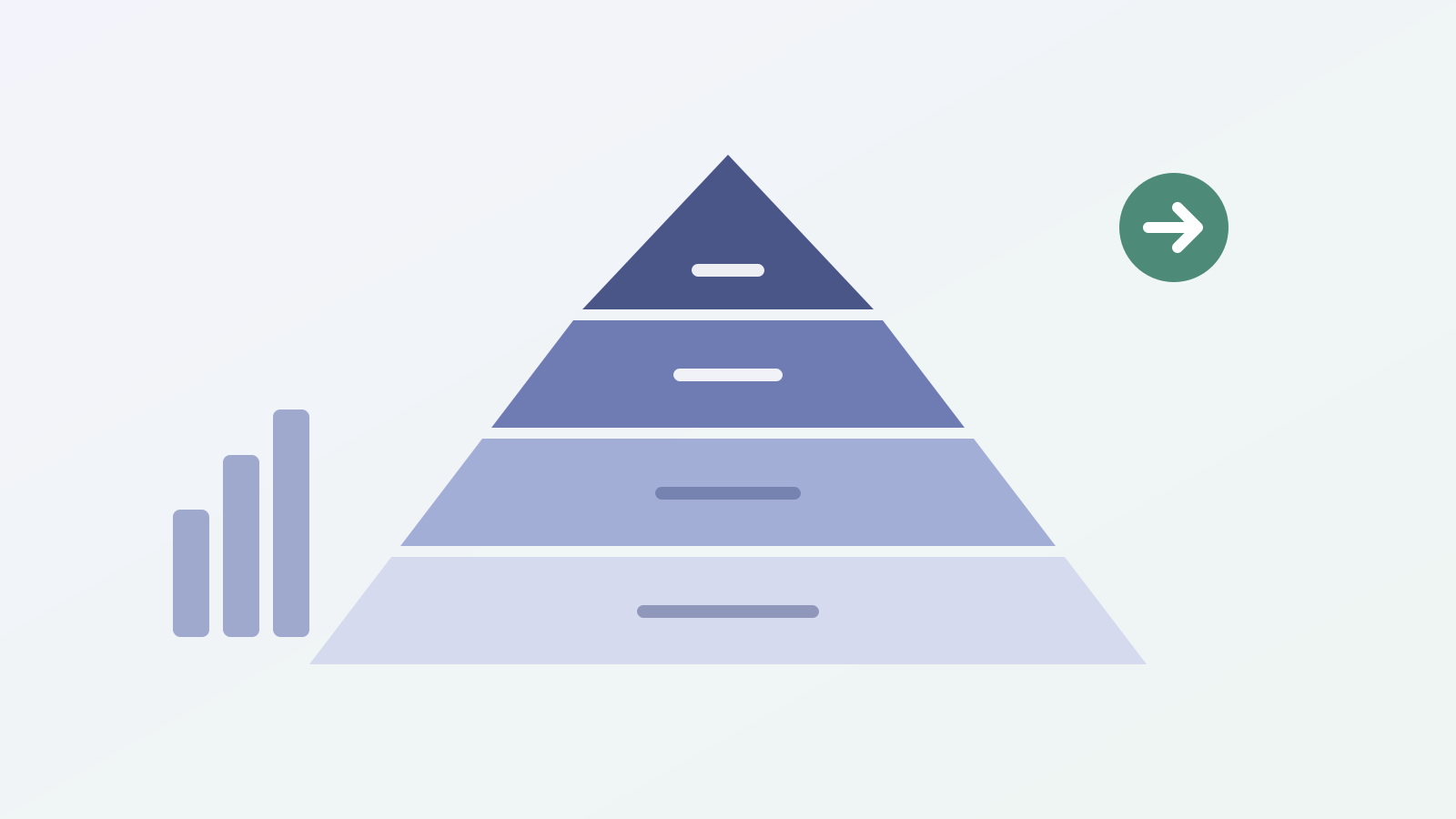
Data alone doesn't tell you what to do. It has to climb several steps before it reaches a decision, each adding meaning to the one below:
The data-to-decision pyramid
- DecisionWhat will we do now, who owns it and when will we measure the effect?
- InsightWhy did this happen, and what does it mean for our business?
- InformationNumbers organised in context: this month compared with last
- DataRaw numbers: visits, enquiries, sales and clicks
1. Start with the question, not the report
Opening an analytics dashboard without a question is like walking into a library without knowing what you're looking for. Good questions are tied to a decision you can make:
Questions that lead nowhere
- How many visitors did we get this month?
- Did the numbers improve?
- What's our most visited page?
Questions that lead to decisions
- Which channel brings enquiries at the lowest cost?
- Where do visitors leave before submitting the form?
- Which service should we expand content for this quarter?
An illustrative example: from a vague question to one that leads to a decision
The vague question: "How are sales going?" It can be answered with twenty numbers, none of which leads to action.
The useful question: "Is free shipping on orders above a certain amount worth continuing next month?" This question defines the numbers you need: average order value before and after the offer, number of orders, the shipping cost the business absorbed and the profit margin. The answer leads to a clear decision: continue, change the minimum or stop the offer. That's what data-driven decision making looks like in a small business.
2. Choose the right metrics
Not every number is a metric. A good metric is tied to a goal, something you can influence, and leads to an action when it changes:
| Type | Examples | Why it matters |
|---|---|---|
| Outcome metrics | Enquiries, sales and revenue | Tell you whether you're reaching the goal |
| Leading indicators | Qualified visits and service-page conversion rate | Predict the outcome before it happens |
| Quality metrics | Return rate, customer satisfaction and repeat orders | Show whether growth is healthy |
| Vanity metrics | Followers or impressions alone | Look good but don't lead to decisions |
And the trap almost everyone falls into:
One main metric per goal
For each goal, choose one main metric that tells you whether you're getting closer and two supporting metrics that explain why. If the goal is more enquiries from the website, the main metric is completed enquiries and the supporting ones are conversion rate and visits from search. More than that scatters attention; fewer doesn't explain what's happening.
3. Collect data you can trust
A good decision on bad data is a bad decision. Three foundations make your numbers trustworthy:
- 1Track goals in analytics
Define what counts as a conversion: a form, an order or a call. Details in our Google Analytics 4 guide.
- 2Know where every visit comes from
Tagged links for every campaign, as in our UTM guide.
- 3One source of truth
One sheet or system for sales and customers, not several conflicting copies.
For what happens before the visit, meaning search visibility, rely on Google Search Console.
The Google Analytics Help Center explains how to set up event and conversion tracking correctly, and most bad decisions start with broken tracking rather than a misreading.
Check the number before you build on it
Before any important decision, compare the figure with a second source where possible: orders in your analytics tool against orders in your store system, or form submissions against what actually arrived in the inbox. A big gap between the two means tracking needs fixing before you draw any conclusion.
4. A repeatable decision cycle
A data-driven decision isn't a one-off event; it's a cycle you learn from every time:
- 1Ask
A clear business question tied to a goal.
- 2Analyse
The numbers that answer it, compared with a previous period.
- 3Decide
A specific action with an owner, a date and a written expectation of the effect.
- 4Measure
Compare what happened with what you expected, then start a new round.
Record each decision in a simple log: the date, the question, the numbers you relied on, the decision and the result you expect. After a month or two, go back and compare the actual outcome with the expected one. This log teaches the team more than any report, because it shows where expectations were accurate and where the numbers misled you. Over time it becomes the foundation of a genuinely data-driven decision culture.
Common mistakes in data-driven decision making
Confusing correlation with cause. Sales rose the same week you changed the page design, but perhaps the cause was a season or a competitor pausing its ads. Look for other explanations before crediting your decision.
Judging from too short a period. Two days of good or bad numbers aren't enough. Wait for a period that covers your normal business cycle, at least a full week and often longer.
Picking the numbers that support your view. It's easy to hunt for the figure that proves what you already wanted. Choose your metrics before you look at the results, not after.
Reports nobody reads. A dashboard of fifty charts sent every week changes nothing. A good report is short, answers specific questions and ends with a suggested action.
Waiting for perfect data. Some decisions can't wait for certainty. When a choice is small and reversible, make it with the evidence you have, set a date to review it and let the results guide your next data-driven decision.
Conclusion
Data-driven decision making is a habit, not a tool: a clear question, a few goal-linked metrics, trustworthy data and a decision cycle you learn from. Start with one question this week, answer it with numbers, then measure the effect of your decision. If you'd like a metrics dashboard that leads to decisions, explore our digital transformation service.
Frequently asked questions
What are vanity metrics?
Numbers that look good but don't connect to a business result or lead to a decision, such as followers or impressions alone. Always pair them with what follows: enquiries and sales.
How many metrics should I track?
Few: three to five key metrics tied directly to your goals, with supporting metrics that explain why they change.
Do I need expensive tools?
Not at first. Google Analytics 4, Search Console and a well-kept sales sheet are enough for most small businesses; discipline in collecting and reading data matters most.
What should I do when the data contradicts my experience?
Don't dismiss either. The conflict points to a question worth investigating: perhaps the data is incomplete or measured wrongly, or perhaps the market really has changed and old experience is less accurate. Check where the numbers came from first, then try a small, measurable change rather than a big decision.
How much data do I need before deciding?
Enough to answer your question with reasonable confidence. Small, reversible decisions don't need a long wait, while big, expensive ones deserve a longer period and more sources. Either way, decide in advance which number would change your mind.
Sources & references

I believe technology is useful when it solves a clear problem — not when it's adopted because it's trendy. AI is a powerful tool for speeding up research, writing, analysis and automation, but it needs human expertise to review, guide and verify accuracy. That's why I prefer to start by understanding the business and its goals, then choose the simplest solution that delivers a measurable result, and build audience trust with honest, useful content.
- Reader rating
- 5.0(2)
- Published articles
- 81
- #analytics
- #kpis
- #data
How would you rate this article?
Be the first to rate
Comments
No comments yet. Share your thoughts!