Body Mass Index (BMI): How to Calculate It, Read the Result and Know Its Limits
BMI is a simple measure linking weight to height, used as a first screening tool. Its simplicity explains its popularity, and understanding its limits matters as much as calculating it.
Body mass index (BMI) is a simple measure linking weight to height, used by the World Health Organization and doctors as a first screening tool for adult weight. Its simplicity explains its popularity, but understanding what it does and doesn't measure matters as much as calculating it. You can calculate it instantly in the BMI Calculator, which shows the result on a visual scale.
Key takeaways
- 1The formula: weight in kilograms ÷ height in metres squared.
- 2A normal adult BMI is 18.5 to under 25, according to the WHO.
- 3BMI is a screening tool, not a diagnosis; it can't tell fat from muscle.
- 4Children, pregnant women and athletes need different standards and interpretation.
How is BMI calculated?
The formula is the same for all adults: weight in kilograms divided by height in metres squared. Here's an example for someone weighing 70 kilograms and 1.75 metres tall:
Calculating BMI
- Height in metres1.751.75 m
- Height squared1.75 × 1.753.0625
- Weight in kilograms7070 kg
- BMI70 ÷ 3.062522.9
An illustrative example with different numbers
Take an adult who is 1.65 metres tall and weighs 68 kilograms. Square the height first: 1.65 × 1.65 ≈ 2.72. Then divide the weight by that: 68 ÷ 2.72 ≈ 25. That result sits right on the boundary between two WHO categories, which is a good reminder that one number isn't enough to judge: two people with the same result can differ greatly in body fat, muscle and activity level.
Note that height must be in metres, not centimetres. The most common mistake in hand calculations is using 165 instead of 1.65, which produces a tiny, meaningless result.
Where does the result fall on the scale?
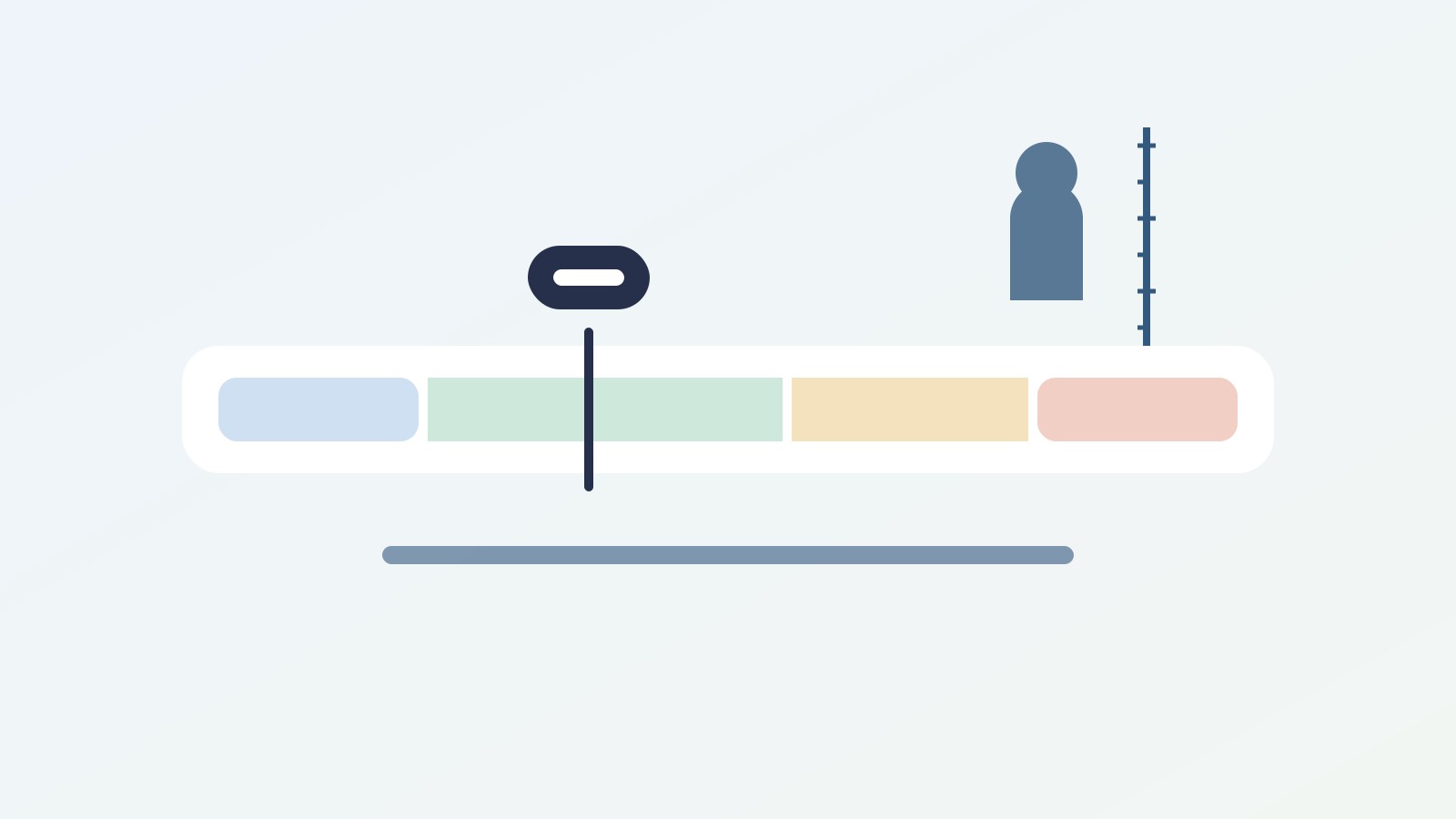
The WHO classifies adult BMI into clear categories. The result in our example falls in the normal range:
The WHO adult classification
- UnderweightBelow 18.5
- Normal weight18.5 to under 25
- Overweight25 to under 30
- Obesity30 and above
1. What BMI doesn't tell you
What BMI measures
- The relationship between weight and height
- A quick first classification for adults
- Comparisons between individuals and groups
What it doesn't measure
- Body fat versus muscle
- Where fat is distributed in the body
- Fitness and overall health on their own
That's why a muscular athlete can land in the "overweight" category despite excellent health, and someone in the normal range can still have other risk factors.
2. Cases that need different interpretation
BMI is compared with growth charts by age and sex, not adult cut-offs.
Weight changes naturally during pregnancy, so follow-up is with a doctor.
Muscle mass raises BMI without meaning extra fat.
For all these reasons, remember the nature of this measure:
Older adults and pregnancy
With age, the balance of muscle and fat in the body changes and height may decrease slightly, so the same number means something different. During pregnancy, weight rises for perfectly natural reasons, so the usual categories don't apply. In these cases, and with chronic conditions, doctors rely on other measures alongside weight and height.
3. Use BMI wisely
- 1Calculate accurately
With a morning weight and a recently measured height, in the BMI Calculator.
- 2Watch the trend, not one number
Change over months matters more than a single day's reading.
- 3Combine it with other measures
Such as waist circumference and daily activity, on your doctor's advice.
- 4Convert units if needed
If your weight is in pounds or height in feet, use the Unit Converter.
Waist measurement: a figure that completes the picture
Waist circumference gives an idea of where fat is stored, which the height-and-weight number can't show. Measure with a flexible tape around your waist just above the navel, at the end of a normal breath out, without pulling the tape tight. Track both figures together over months; their direction matters more than any single reading. When you have questions about the results, a doctor or dietitian is the right person to ask.
Common mistakes in reading the result
Judging from a single reading. Weight shifts from day to day with water and food. Look at the trend over weeks, not one day's number.
Applying adult categories to children. Children and teenagers have their own charts by age and sex, because their bodies are still growing. Don't apply adult categories to them.
Comparing yourself with others. A friend's or colleague's number tells you nothing about your health. Every body has its own circumstances, and the only useful comparison is with yourself over time.
Making big health decisions without a professional. A strict diet or an intense exercise plan based on one number can do more harm than good. Talk to a doctor before any major change, especially if you have a health condition.
Forgetting what the number is for. It was designed to describe groups of people, which is why it's quick and cheap to use. For an individual it's a useful first signal that something may be worth checking, and nothing more than that.
Simple habits matter more than the number
The number is a tool, not a goal. What makes a real long-term difference to health is a set of simple daily habits: enough regular sleep, some movement every day even if it's a half-hour walk, meals with vegetables and enough protein, and fewer sugary drinks. These habits help your body whatever the calculator shows, and they improve energy, mood and sleep before your weight changes. When you start any change, keep it small enough to sustain, because consistency counts for more than enthusiasm in the first week. And remember that regular check-ups with a doctor reveal things no scale can.
An imperial example, and your waist
At 180 lb and 5 ft 10 in: 180 lb ≈ 81.6 kg and 70 in = 1.778 m, so BMI ≈ 81.6 ÷ 3.16 ≈ 25.8 — just into overweight. The imperial shortcut is weight in pounds × 703 ÷ height in inches squared. Because BMI doesn't show fat distribution, also measure your waist at navel level with a flexible tape. Many health guidelines link a large waist to higher risk even when BMI is normal, so discuss both numbers with your doctor.
Conclusion
BMI is a simple formula with a clear classification: 18.5 to under 25 is normal for adults. But it's a screening tool that can't tell fat from muscle, and it needs different interpretation for children, pregnant women and athletes. Calculate it, watch its trend and discuss it with your doctor. To understand the units used in the calculation, read our unit conversion guide.
Frequently asked questions
What's the BMI formula?
Weight in kilograms divided by height in metres squared. For example: 70 kg ÷ (1.75 × 1.75) ≈ 22.9.
What is a normal BMI?
Under the WHO adult classification: 18.5 to under 25 is normal, 25 to under 30 is overweight, 30 and above is obesity, and under 18.5 is underweight.
Does BMI suit children and athletes?
For children it's read against growth charts by age and sex, not the adult cut-offs, and it can read high for athletes because of muscle mass.
How often should I weigh myself if I'm tracking it?
Weight changes daily with water and food, so daily weighing can confuse more than it helps. Once a week is usually enough, at the same time of day under the same conditions, watching the trend over several weeks. If you have a health condition, follow your doctor's advice.
Does it replace a visit to the doctor?
No. It's a simple first screening tool, not a diagnosis. A doctor looks at a fuller picture: blood tests, blood pressure, family history and lifestyle. Use the number as a starting point for a conversation with a professional, not a substitute for one.
Sources & references

I believe technology is useful when it solves a clear problem — not when it's adopted because it's trendy. AI is a powerful tool for speeding up research, writing, analysis and automation, but it needs human expertise to review, guide and verify accuracy. That's why I prefer to start by understanding the business and its goals, then choose the simplest solution that delivers a measurable result, and build audience trust with honest, useful content.
- Reader rating
- 5.0(2)
- Published articles
- 82
- #BMI
- #body mass index
- #health
- #healthy weight
How would you rate this article?
Be the first to rate
Comments
No comments yet. Share your thoughts!