How to Calculate Zakat on Your Wealth Correctly: Nisab, Hawl and a Worked Example
The basic rule for calculating zakat is clear: add up, deduct, compare with the nisab, check the hawl, then pay one-fortieth. It's the special cases that need a scholar.
Zakat is one of the pillars of Islam, and many people hesitate to calculate zakat on their wealth for fear of getting it wrong. In fact the basic rule is clear; it's the special cases that need a scholar's guidance. This guide sets out the general method with examples, which you can apply in the free Zakat Calculator; it runs in your browser and doesn't store your figures.
Key takeaways
- 1Add up your zakatable assets and deduct debts currently due; that's your net amount.
- 2If the net amount reaches the nisab and a full lunar year has passed, the due is one-fortieth: 2.5%.
- 3The nisab is estimated as the value of 85 g of gold or 595 g of silver, so it changes with prices.
- 4This is a general explanation, not a fatwa; special cases and business zakat should be referred to the relevant authorities.
Has your wealth reached the nisab?
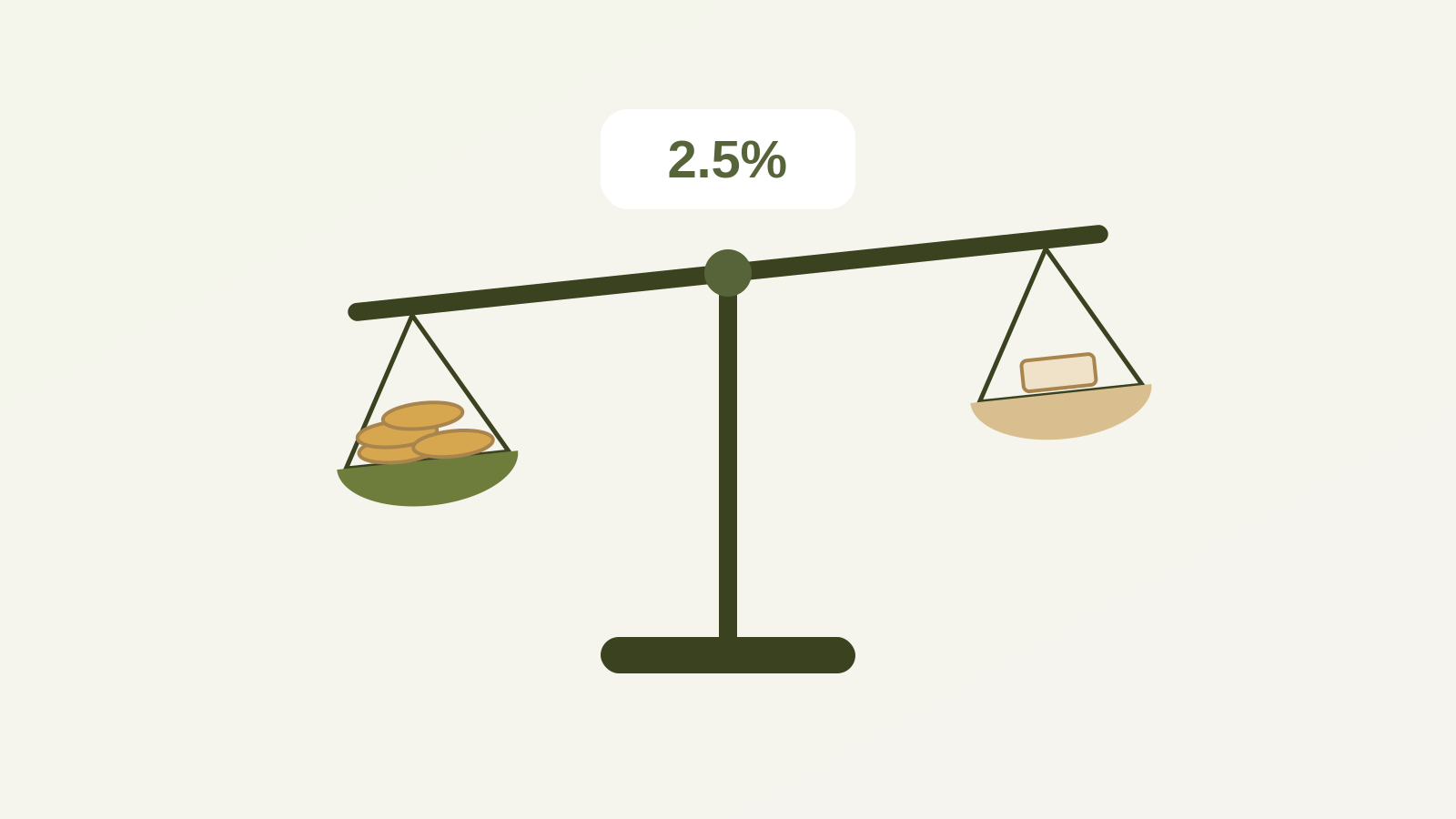
The first question in zakat is a simple comparison: your net zakatable wealth on one side, the nisab on the other. If your side outweighs it and the year has passed, zakat is due:
The first scale: net wealth vs the nisab
If the net reaches the nisab and the year has passed: zakat = net × 2.5%
Many scholars prefer the silver nisab as more beneficial to the poor, while others use the gold nisab; the calculator lets you choose.
A general introduction to zakat, its rules and history is available in Wikipedia's article on zakat. For your own special cases, though, rulings should come from qualified scholars in your country rather than general articles.
1. What's included in the calculation?
Usually included
- Cash in hand and bank accounts
- Saved gold and silver
- Shares and investments held for trading
- Trade goods at market value
- Money owed to you that's expected to be repaid
Usually excluded
- Your home
- Your personal car
- Furniture and items in use
- What you need for personal use
Women's jewellery kept for wear is a well-known point of difference between schools of thought, and long-term shares have their own details; ask a trusted religious authority in these cases.
Money that's easy to forget
When people calculate zakat, most remember their current account balance and forget other money: a second savings account, cash at home, an e-wallet balance, a loan you made to someone committed to repaying it, or stock held for sale if you run a business. List all these sources once, keep the list and review it on your zakat date every year.
2. A worked example: how to calculate zakat
Someone has 50,000 riyals in their account, shares held for trading with a market value of 20,000 riyals today, and a debt currently due of 5,000 riyals. Assume the nisab's value that day is below their net wealth:
Calculating zakat line by line
- Cash in the bank account50,00050,000
- Trading shares at market value+ 20,00070,000
- Debt currently due− 5,00065,000
- Compare with the nisab65,000 exceeds the nisab, and the year is completeZakat is due
- Zakat due65,000 × 2.5%1,625 riyals
What if your balance changed during the year?
Many people's money rises and falls through the year, so they wonder which balance to use. The practical approach many scholars accept is to set a fixed zakat date and, on that day, look at all your zakatable wealth; if it has reached the nisab, pay zakat on all of it. It's easier to apply and more cautious for you than tracking a separate year for every amount. There are known scholarly differences on the details, so ask a scholar if you need to.
3. Choose a fixed date for your zakat
The easiest practical approach is a fixed Hijri day each year, such as the 1st of Ramadan, when you tally what you own and pay its zakat. Because the Hijri year is about eleven days shorter than the Gregorian year, use the Hijri and Gregorian date converter to find the matching day each year, as explained in our Hijri calendar guide.
- 1Pick your Hijri day
Such as the 1st of Ramadan every year.
- 2Record your balances
Cash, accounts, gold and investments and their values on that day.
- 3Deduct debts currently due
Only debts payable now.
- 4Calculate and pay
Compare with the nisab, then pay 2.5% of the net, using the Percentage Calculator if helpful.
So the explanation isn't misread, here's an important note:
Keep a simple record each year: the date, the wealth you counted, the debts you deducted, the gold price you used and the zakat due. That record makes it quicker to calculate zakat the following year and reassures you that nothing was missed.
Common mistakes when you calculate zakat
Forgetting other accounts. Zakat is due on your total zakatable wealth, not one account. Add up every account and all your cash first.
Deducting all long-term debt. Scholars differ on deducting debts, and many deduct only what is currently due, not, for example, the whole of a mortgage. If you have a large debt, ask a scholar about your case.
Delaying payment without reason. When zakat falls due, it's recommended to pay it without delay. Prepare the calculation a few days before your date so you're not late.
Relying on a calculator alone for special cases. A calculator applies the general method, but it can't give rulings on special cases such as jewellery worn for adornment, shares or business assets. For those, ask a trusted religious authority.
Using an old gold price. The nisab moves with the price of gold. Check the price on your zakat date rather than reusing last year's figure, or you may calculate zakat on the wrong threshold.
A second example: gold and savings
Someone has 30,000 riyals in savings, 100 g of gold kept as savings (not worn) and an instalment of 2,000 riyals due now. If gold were 400 riyals per gram (an illustrative price), the gold is worth 40,000. Net: 30,000 + 40,000 − 2,000 = 68,000. The gold nisab at that price is 85 × 400 = 34,000, so zakat is 68,000 × 2.5% = 1,700 riyals. Use the real price on the day, and note that the nisab refers to pure gold.
Conclusion
Add up, deduct debts currently due, compare with the nisab, check the year has passed, then pay 2.5%. Calculate carefully on a fixed day each year, keep a record of your balances and ask scholars about special cases. Start now in the Zakat Calculator.
Frequently asked questions
How much is zakat on wealth?
One-fortieth, or 2.5% of net zakatable wealth, once it reaches the nisab and a full lunar year has passed.
What is the nisab?
The minimum wealth on which zakat is due, commonly estimated today as the value of 85 g of gold or 595 g of silver, so its value changes with their prices.
Is zakat due on my home and personal car?
Items for personal use, such as your home, car and furniture, are usually excluded. Special cases such as women's jewellery and long-term shares have details to ask a scholar about.
Is zakat due on money saved for a house or a wedding?
According to the majority of scholars, yes, if it reaches the nisab and a full lunar year passes, because intending to spend it later doesn't remove zakat while it remains yours. If your situation is unusual, ask a qualified scholar in your country.
How do I find today's nisab value?
The gold nisab is the value of 85 grams of pure gold according to the majority of scholars, so multiply 85 by the price of a gram of 24-carat gold on the day you calculate. Some scholars prefer the silver nisab, which is lower and more cautious in favour of the poor. Prices change daily, so use the price on your calculation day itself.
Sources & references

I believe technology is useful when it solves a clear problem — not when it's adopted because it's trendy. AI is a powerful tool for speeding up research, writing, analysis and automation, but it needs human expertise to review, guide and verify accuracy. That's why I prefer to start by understanding the business and its goals, then choose the simplest solution that delivers a measurable result, and build audience trust with honest, useful content.
- Reader rating
- 5.0(2)
- Published articles
- 82
- #zakat
- #nisab
- #personal finance
- #zakat calculator
How would you rate this article?
Be the first to rate
Comments
No comments yet. Share your thoughts!